(For Illustrative Purposes Only)
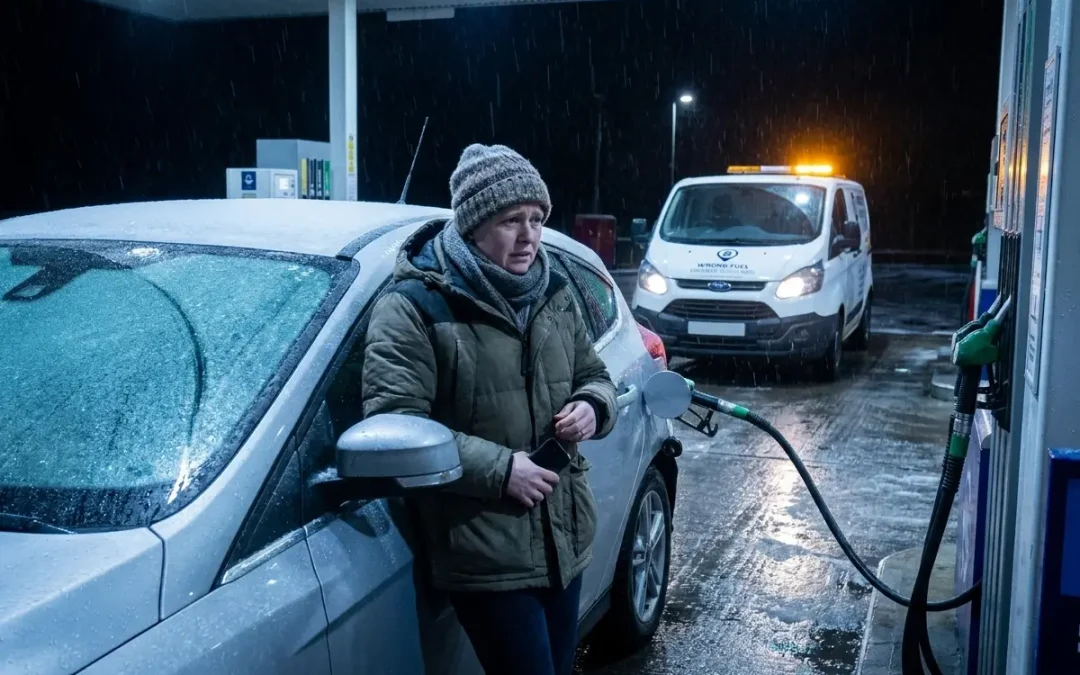
Scotland loses light fast once the clocks go back. At the winter solstice the country gets under seven hours of daylight, which means the vast majority of winter fills happen before sunrise or after sunset. Add rushing to escape the cold and the chance of driving an unfamiliar car over the festive period, and misfuelling becomes far easier. This guide explains why winter is a hidden misfuelling season, why the Christmas vehicle switch raises the risk further, and what to do if it happens on a dark Scottish road. For immediate help, call 0131 235 2947. If you need the full picture on drains and costs, read this guide to wrong fuel recovery in Scotland. The service runs 24 hours a day, including Christmas Day and New Year, with no premium for the timing.
Why winter is Scotland’s hidden misfuelling season
(For Illustrative Purposes Only)
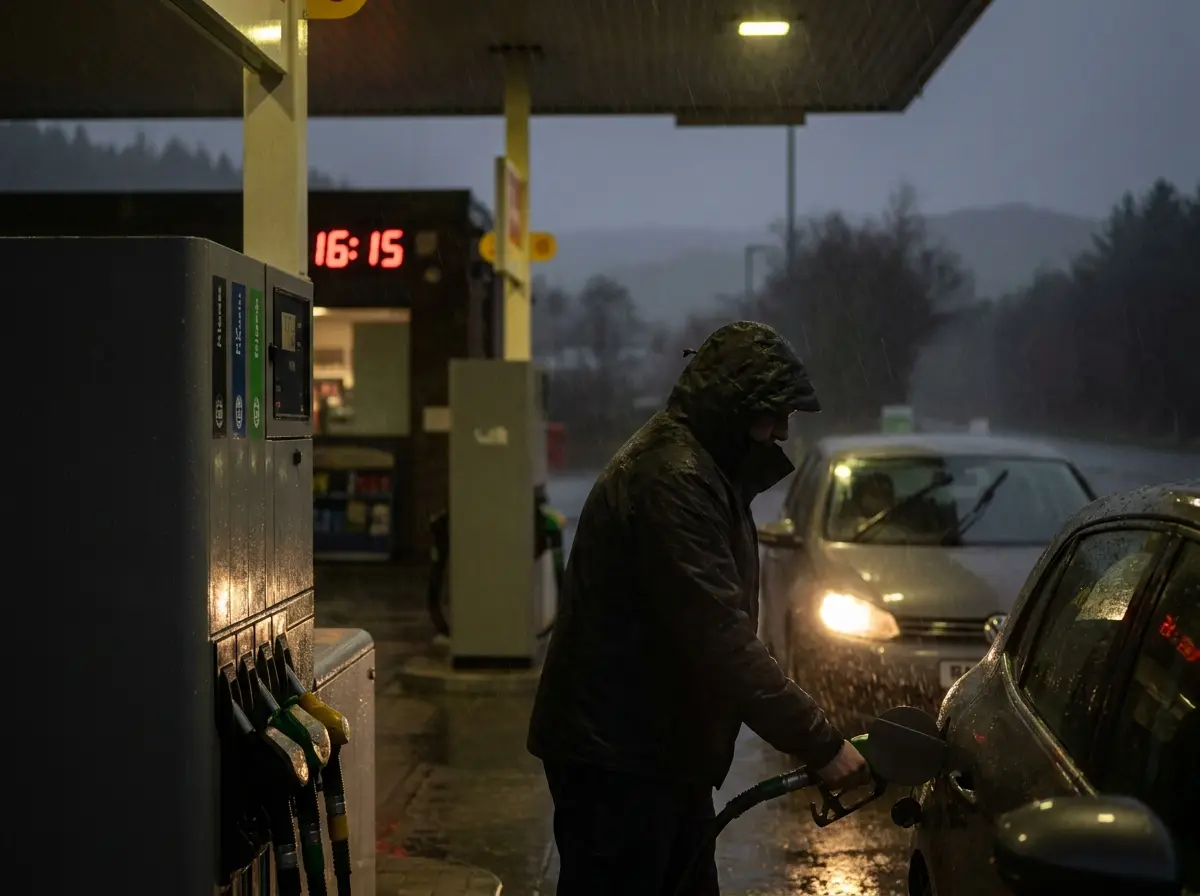
Darkness drives the risk. Edinburgh sees sunrise around 8:42 am and sunset near 3:40 pm at the winter solstice, giving under seven hours of daylight. Glasgow follows a similar pattern, and Inverness gets even less, roughly six and a half hours.
That means a driver filling up at 7:30 am in December is doing it before sunrise, and a driver filling up at 4:15 pm is already in the dark. The morning commute fill and the evening fill both happen without daylight for most of November, December and January.
Cold weather adds pressure at the pump. Rain, wind and low temperatures make drivers want to finish quickly and get back in the car, and that urge to rush cuts the attention paid to the nozzle label.
Forecourt lighting varies. Some sites are well lit, others less so, and the nozzle colour and text that are obvious in daylight become harder to read in darkness and rain. A driver filling the same car every week may stop checking altogether.
None of these factors alone causes a misfuel. Together, darkness, rushing and poor lighting make winter a period of higher risk, particularly for drivers switching between fuel types such as petrol in diesel vehicles.
The December vehicle switch: borrowed cars, new cars and festive hire
(For Illustrative Purposes Only)
Winter brings a specific trigger: driving a car you do not normally drive. Christmas and New Year create three common versions of this.
Borrowed cars. Family visits, airport runs and longer journeys often mean borrowing a relative’s car. A petrol driver who picks up a diesel car (or the reverse) can reach for the wrong nozzle out of habit, especially in the dark and cold.
New cars. December and January are busy months for new-car purchases and lease changeovers. A driver switching fuel type may fill on autopilot for the first few attempts, and the first fill on a dark evening carries the highest risk.
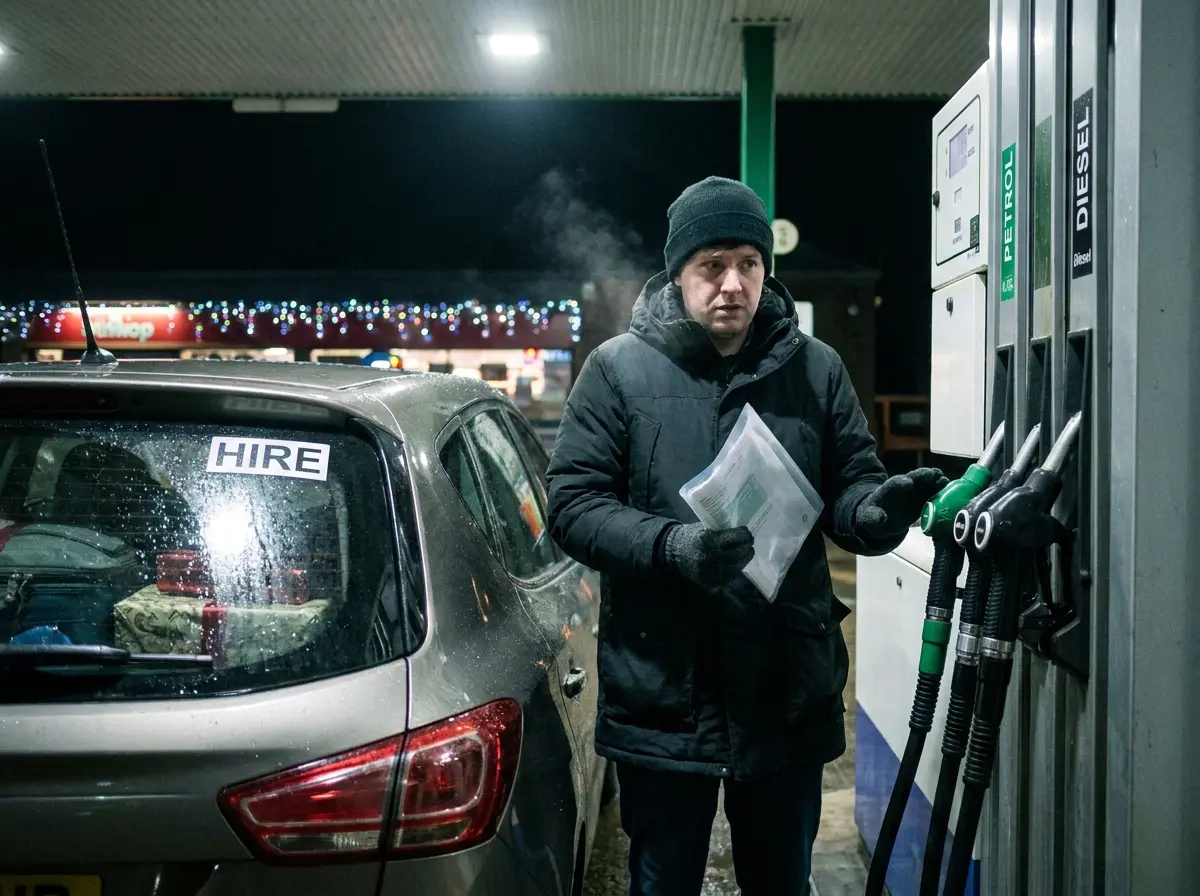
Festive hire cars. People hire vehicles over Christmas when their own car is too small or unavailable. Unfamiliarity with a hire car’s fuel type is a well-known misfuel trigger across the industry, and winter conditions add darkness and rushing on top.
The link between all three is the same. Driving a vehicle you do not usually drive is the most common misfuel trigger at any time of year, and winter conditions make it more likely to end at the pump rather than pass without incident.
Scottish winter roads: where to stop safely after misfuelling
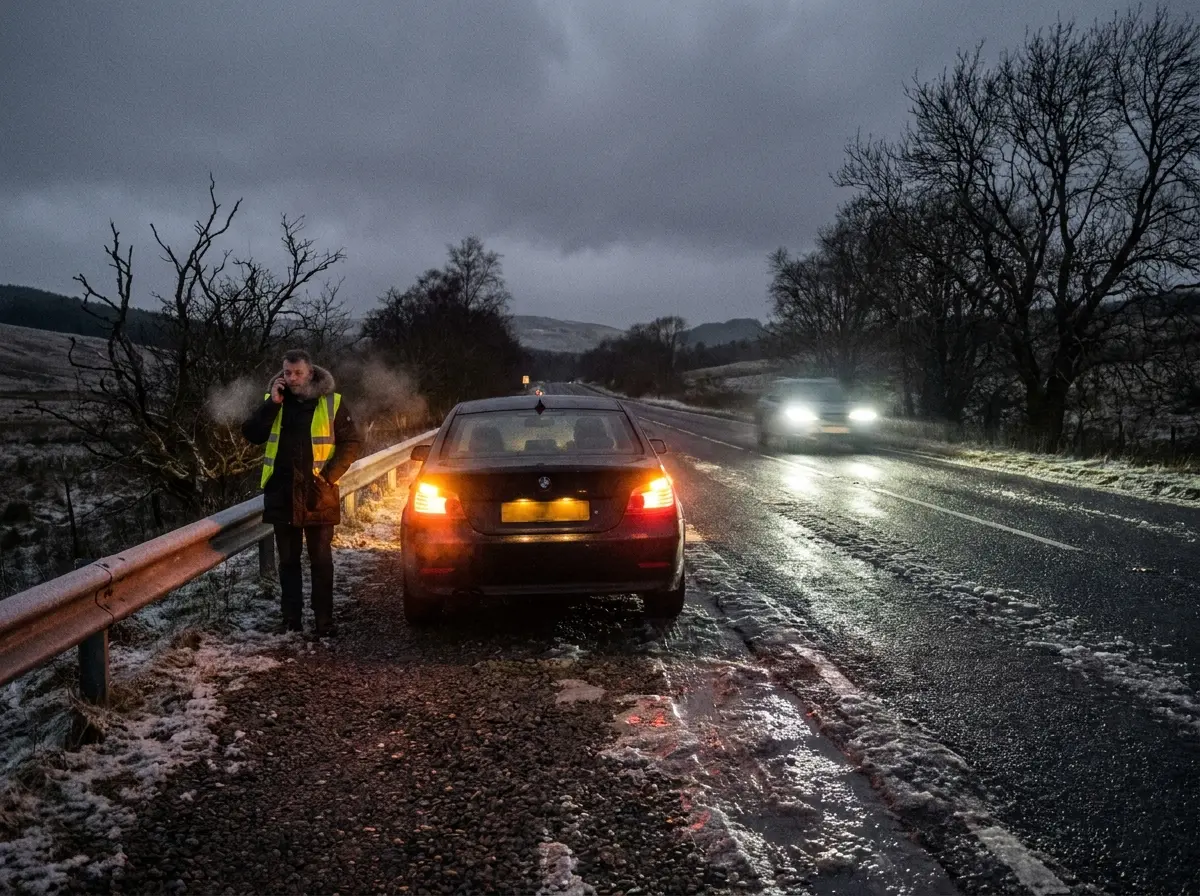
(For Illustrative Purposes Only)
Safety comes before anything else if you realise the mistake while driving in winter conditions. Getting the vehicle stopped safely matters more than getting the fuel drained quickly.
On a motorway (M8, M80, M90): call 999 first if you are stopped in a live lane. For motorway information, call Traffic Scotland on 0800 028 1414. Follow current Go Left guidance and move to the nearside verge or an emergency refuge area when it is safe to do so. Do not assume a hard shoulder exists, particularly on smart motorway stretches through Glasgow. Once stopped safely, switch off the engine, put on hazards and sidelights, then call for a drain.
On the A9 in winter conditions: this route between Perth and Inverness has limited stopping points in places, especially during winter. Pull in at the first safe spot, a lay-by, service area or wide verge. Do not carry on looking for a garage.
On rural roads in darkness: many Scottish rural roads have no street lighting, no hard shoulder, and may be icy. Pull over somewhere visible to other traffic, leave hazards and sidelights on, and stay with the vehicle if it is safe. Call 999 if the car has stalled somewhere it cannot be moved to safety.
For all of these situations, our mobile technician can attend the vehicle wherever it has stopped, whether that’s a lay-by, roadside or service area. No tow is needed. Call 0131 235 2947.
The three-second forecourt check that works in any light
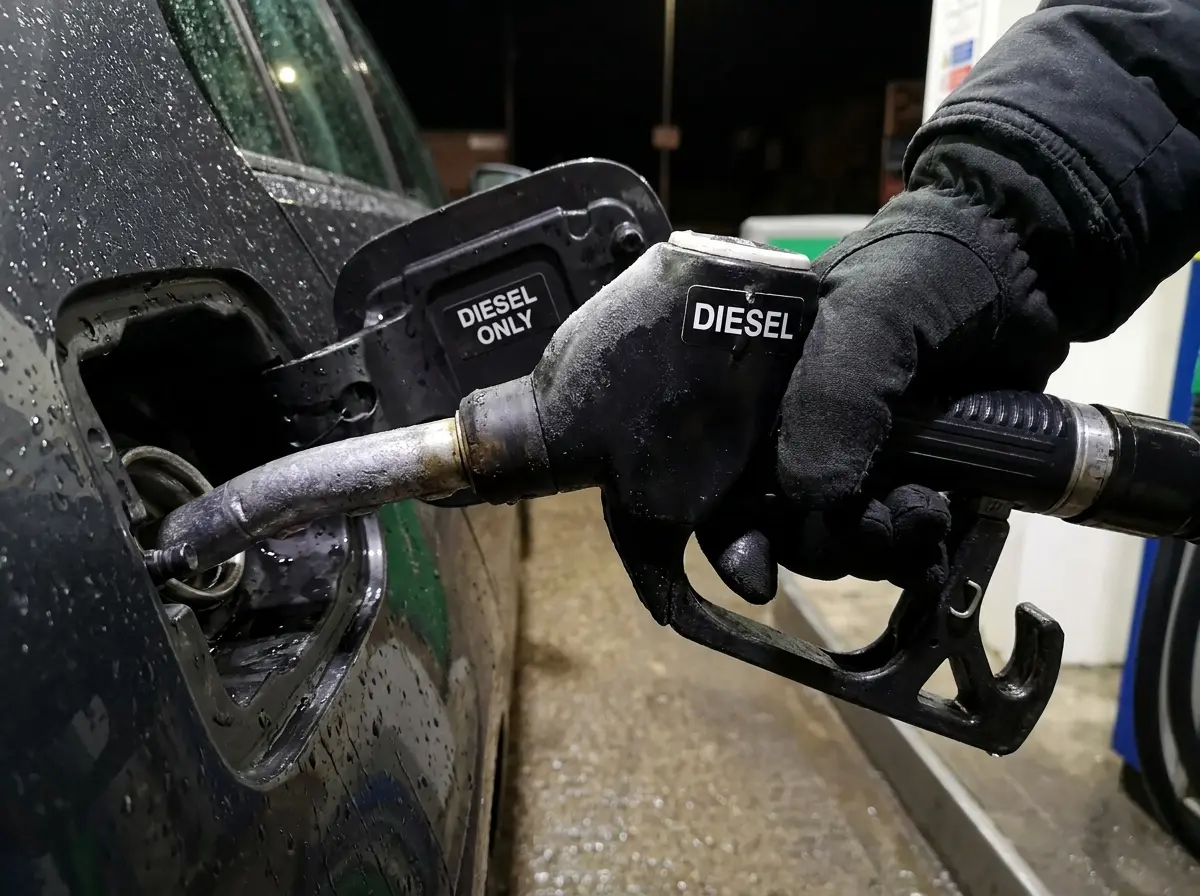
(For Illustrative Purposes Only)
Three steps, three seconds and one check that catches the mistake before it happens.
- Read the pump label before lifting the nozzle. Even in poor light, it is right in front of you.
- Check the nozzle colour. Green means unleaded petrol, black means diesel, and this colour coding is standard across the UK. Up close, the difference stays visible even in poor light.
- Match it to the fuel cap. Most vehicles print the fuel type on or near the cap, and many have a coloured ring or a label just inside the flap.
This takes about three seconds and stops the mistake before any fuel goes in. It is worth doing every time, but especially when driving an unfamiliar vehicle, filling up in the dark, or in a hurry, which are exactly the conditions winter brings.
If the wrong fuel is already in the tank, do not start the engine. Call 0131 235 2947.
Frequently Asked Questions
Can you reach me if I misfuel on the A9 in winter conditions?
Yes. We cover all of Scotland, including rural roads, lay-bys and roadsides in darkness and winter conditions. Our mobile technician attends wherever the vehicle has stopped. Call 0131 235 2947.
Is there an extra charge for wrong fuel recovery on bank holidays or overnight?
No. We run 24 hours a day, every day of the year, including Christmas Day, Boxing Day and New Year. There is no bank-holiday premium and no out-of-hours surcharge.
I just switched to a new car and filled it with the wrong fuel. Is this common?
Yes, this is one of the most common misfuel triggers at any time of year. Drivers who recently switched fuel types often fill out of habit before the new routine sets in, especially on a dark winter evening.
Does misfuelling cause more damage in cold weather than in summer?
Cold weather does not change how the wrong fuel damages an engine, but it does raise the chance of misfuelling happening in the first place. The damage itself comes from starting the engine and circulating contaminated fuel, not from the temperature outside.