
(For Illustrative Purposes Only)
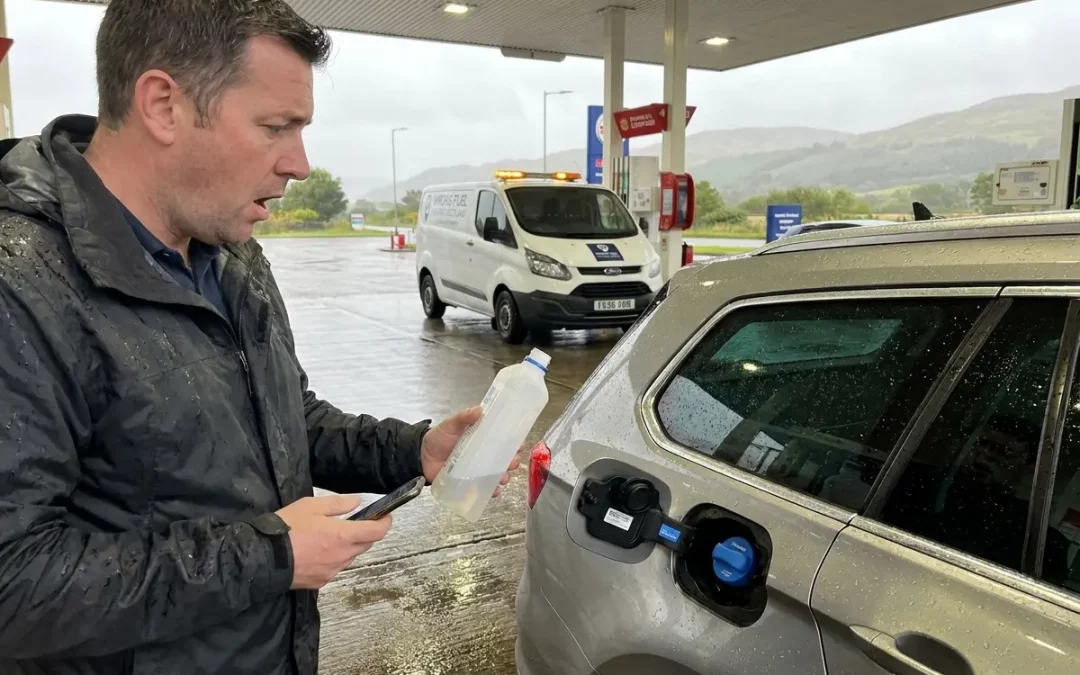
Do not start the engine. If AdBlue has gone into a diesel tank, this is a different problem to ordinary misfuelling. Wrong fuel causes mechanical wear, but AdBlue crystallises and corrodes inside the fuel system, which is a harder problem to reverse once the engine has run. If the vehicle has not been started, the contamination can usually be removed before any lasting damage occurs. This guide explains what AdBlue is, how it ends up in the wrong tank, the damage chain that follows, and how specialist AdBlue contamination recovery works across Scotland. We are Scotland-wide, registered in Dunfermline, and available 24 hours a day. Call 0131 235 2947 now if you suspect AdBlue contamination in Scotland.
What AdBlue is and why modern Scottish diesel vehicles need it
(For Illustrative Purposes Only)
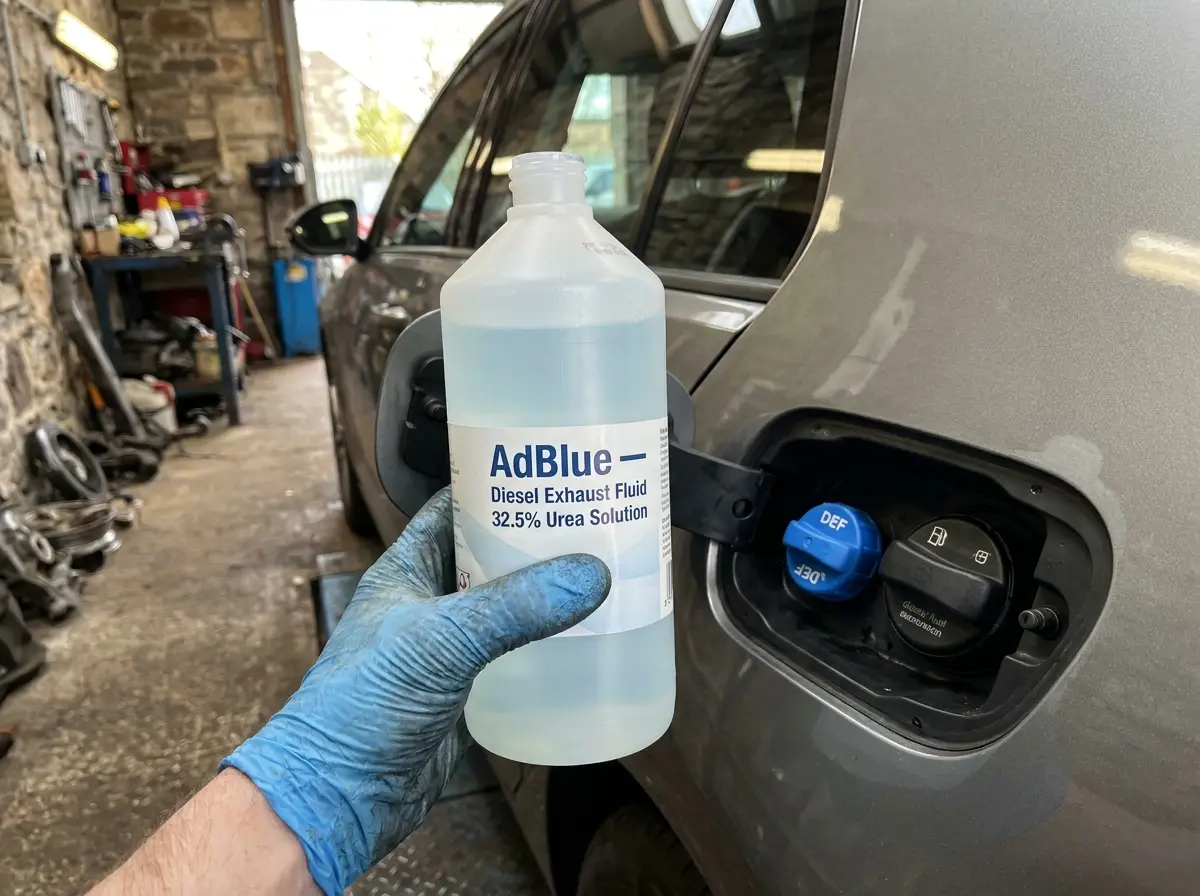
AdBlue is a liquid made from 32.5 per cent urea dissolved in deionised water, also known as Diesel Exhaust Fluid or DEF. It is used in diesel vehicles fitted with Selective Catalytic Reduction (SCR) systems, which reduce harmful nitrogen oxide emissions from the exhaust. Most diesel cars and vans built to Euro 6 standards, broadly from 2015 onwards, carry an SCR system and a separate AdBlue tank.
AdBlue has its own tank and filler. It is not a fuel additive, and it must never go into the diesel fuel tank. It works through an independent system, injected into the exhaust gases rather than mixed with the fuel that powers the engine.
As more Euro 6 diesels appear on Scottish roads, AdBlue contamination cases are rising. The reason comes down to where that second filler sits.
How AdBlue gets into the diesel tank (similar filler caps, time pressure)
(For Illustrative Purposes Only)
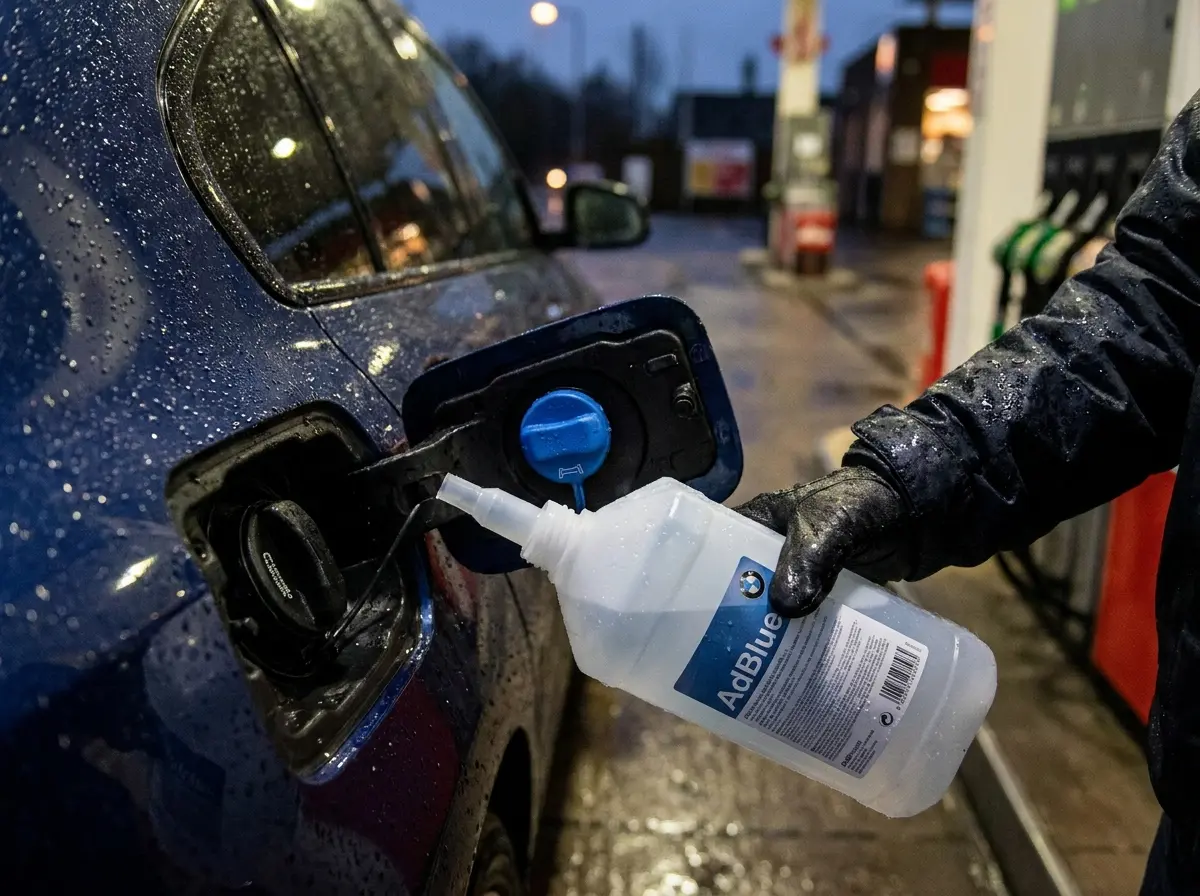
The AdBlue filler cap sits right next to the diesel filler cap on most Euro 6 diesel vehicles, usually smaller and often blue. In a rush, in poor light, or in an unfamiliar car, it is easy to open the wrong filler and pour AdBlue straight into the diesel tank. The containers can look similar at a glance too.
This mistake catches out experienced drivers as much as anyone else. Fleet drivers, hire car users and people filling up a vehicle they do not usually drive are all common cases. Two similar fillers sitting side by side, not carelessness, is usually the cause.
BMW, Mercedes-Benz and Volkswagen diesel models commonly have this layout, purely a matter of vehicle design rather than a fault with any particular brand. As Euro 6 diesels become more common on Scottish roads, this type of misfuelling is becoming more common alongside them.
The damage chain: crystallisation → injector blockage → catalytic failure
(For Illustrative Purposes Only)
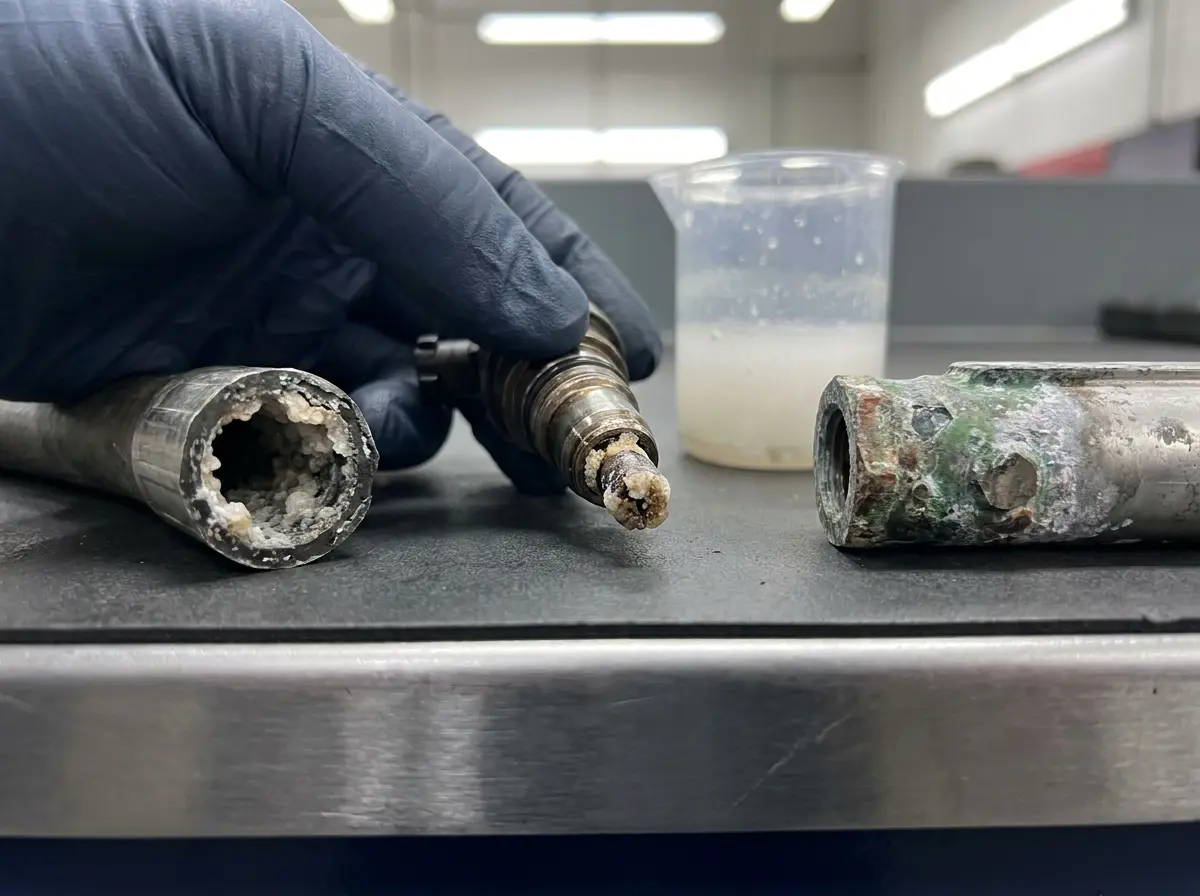
AdBlue in a diesel tank sets off two damaging processes at once, and both start fast. Within minutes of the engine running, the urea in AdBlue begins to crystallise into hard, abrasive deposits as the contaminated mixture circulates under pressure through the fuel system.
At the same time, the water content in AdBlue attacks metal components built for diesel, not for an aqueous urea solution. The fuel pump, fuel lines and injectors corrode, and this corrosion compounds the damage the crystals are already causing.
Together, these two mechanisms block and abrade precision parts, particularly the injectors and the high-pressure fuel pump. Manufacturers often require replacing every component the mixture has touched, since leftover crystallisation can cause repeat faults even after a flush.
This differs from standard wrong fuel contamination. Petrol in diesel strips lubrication and causes metal-on-metal wear, which is serious in its own right. AdBlue in diesel crystallises and corrodes at the same time, a more destructive combination that is harder to reverse once the engine has run. Both situations call for an immediate drain, but AdBlue leaves less room for delay.
Why AdBlue removal costs more and takes longer than standard drain
(For Illustrative Purposes Only)
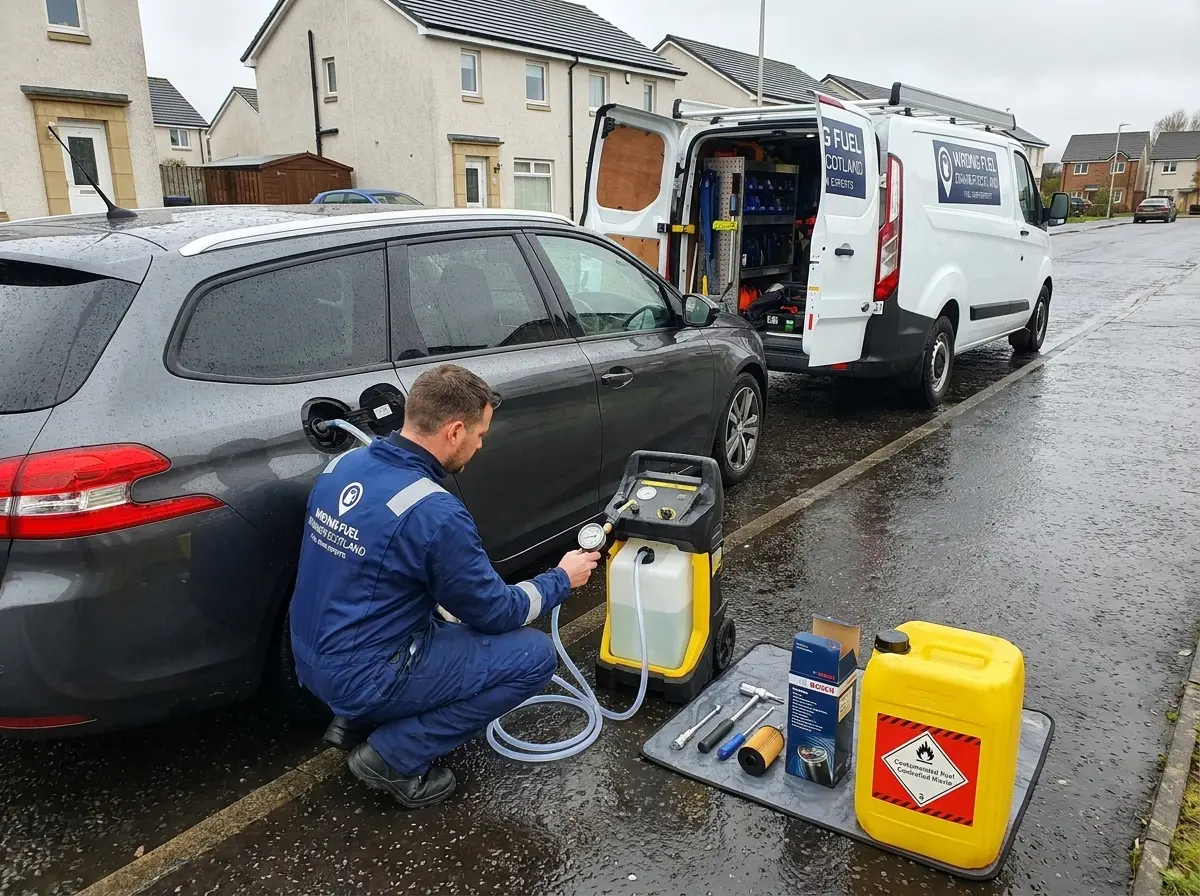
AdBlue contamination removal typically costs more than a standard wrong-fuel drain, for a clear structural reason. A standard petrol-in-diesel drain removes the wrong liquid from the tank and lines. An AdBlue removal has to go further: address early crystallisation, flush thoroughly to clear urea deposits, and inspect components for corrosion.
If the engine was started before help arrived, the gap in cost and time widens. Crystallised deposits may already have reached the injectors and the pump, and these components may need extra inspection or replacement before the vehicle is safe to drive again.
Time reflects this difference too. A standard drain is usually finished within 30 to 45 minutes. AdBlue removal can take longer because of the extra flushing and inspection steps involved.
A higher upfront cost for specialist AdBlue removal is a fraction of the repair bill that follows if the contamination is left untreated or handled by someone without the right equipment. Price is confirmed before any work begins, so there are no surprises once the job is under way.
Our Scotland-wide AdBlue removal: all major cities covered
Scotland-wide AdBlue removal reaches Glasgow, Edinburgh, Aberdeen, Inverness, Dundee, Stirling and Falkirk, plus every route between them. We are registered in Dunfermline, Fife, with mobile coverage across Scotland, so a technician can reach a forecourt, a driveway or a roadside wherever the vehicle sits.
Callouts run 24 hours a day, every day, including bank holidays, with no night or weekend premium.
The credentials matter here: Scotland’s only independent PAS43-certified wrong fuel recovery service, ISO 9001 accredited, and SEPA registered for the safe disposal of AdBlue-contaminated fuel. Every job is fully insured and never subcontracted.
Specialist AdBlue decontamination equipment is carried on every unit, not just a standard drain kit. Not every wrong-fuel operator carries the right equipment for AdBlue, which is why this distinction matters when choosing who to call.
A written report is provided with every recovery, useful for any insurance or warranty claim that follows. Call 0131 235 2947 for a Scotland-wide AdBlue contamination response.
Conclusion
AdBlue contamination in a diesel tank calls for a different response to ordinary misfuelling. The moment AdBlue is suspected in the wrong tank, the engine should stay off, since crystallisation and corrosion begin within minutes of the fuel system running.
Acting before the engine starts gives the best chance of a straightforward drain rather than a full parts replacement. A specialist AdBlue removal takes longer and costs more than a standard drain, for good reason: the flushing and inspection steps protect the injectors, pump and fuel lines from lasting harm.
Warning lights and limp mode do not always mean AdBlue contamination. They can also point to a genuine SCR system fault, so proper diagnosis matters more than guesswork when symptoms appear without a known misfuelling event.
Frequently Asked Questions
What should I do if I accidentally put AdBlue in my petrol tank?
Do not start the engine, and call a specialist recovery team straight away. AdBlue in a petrol fuel system behaves differently to AdBlue in diesel, but it still needs a proper drain and flush before the vehicle is driven. Petrol engines are not designed for a urea solution in the tank, and running the engine risks pulling contaminated fuel through the system.
Can I drive with AdBlue in my diesel fuel tank?
Driving should be avoided completely once AdBlue is known to be in the diesel tank. Crystallisation begins within minutes of the engine running, and driving forces the contaminated mixture through the fuel lines, pump and injectors under pressure. The vehicle should be left where it is until our recovery specialist arrives.
What happens if diesel goes into an AdBlue tank?
Diesel in an AdBlue tank contaminates the SCR system rather than the fuel system, and it needs the AdBlue tank drained and flushed separately. This is a different repair to AdBlue-in-diesel contamination, since the diesel fuel system itself is not affected. Warning lights related to the SCR system often appear soon after this type of mistake.
Is AdBlue classed as hazardous in Scotland?
AdBlue itself is non-toxic and safe to handle in normal use, but contaminated fuel mixed with AdBlue is treated as controlled waste once drained. SEPA registration is required for anyone disposing of AdBlue-contaminated fuel in Scotland. This is one reason to use a registered specialist rather than attempting a home drain.