(For Illustrative Purposes Only)
Realising you’ve left a forecourt without paying is unsettling, especially when you’re already frazzled by a misfuel. It happens more often than you might think, and if you sort it out quickly, most people view it as a fixable mistake rather than a crime.
Scotland handles these situations differently from England, so let’s focus on what applies north of the border. You do need to pay for the fuel, and acting fast keeps things simple.
If you’re still worried about the misfuelling itself, our guide to wrong fuel recovery covers what to do next.
Why misfuelling and forgetting to pay so often happen together
(For Illustrative Purposes Only)
A misfuel grabs all your attention. Once you spot your mistake at the pump, your mind jumps straight to the car damage, recovery, and how you’ll get to work tomorrow.
Paying for fuel? That’s in a different mental compartment. When the problem shifts to your car, the shop side of things just fades out.
Practical stuff makes it worse. Maybe you move your car, wait somewhere else, and let a technician take over. By the time you’re back on the road, an hour or more might’ve slipped by.
Honestly, most people who forget to pay after putting petrol in a diesel car aren’t trying to dodge payment. The forgetting is tangled up with the stress of the misfuelling itself.
The law in Scotland is not the same as the law in England
(For Illustrative Purposes Only)
Most articles talk about “making off without payment”, which is a statutory offence in England, Wales, and Northern Ireland. Scotland doesn’t use that law, and the fuel industry’s own security body confirms it.
Scotland’s legal system is its own thing. If you forget to pay for fuel here, it falls under Scots common law, not the rules used elsewhere in the UK.
The main offences are theft and fraud, but criminal cases go through the Procurator Fiscal, not the English court process. The fiscal decides if a case should move forward.
Intent matters most. If you genuinely forgot and come back to pay as soon as you realise, you’re in a very different position from someone who never meant to pay.
This is just general info, not legal advice. If you get formal contact from a petrol station, retailer, or the police, talk to a solicitor about your situation.
What happens next: forecourt systems, records and recovery
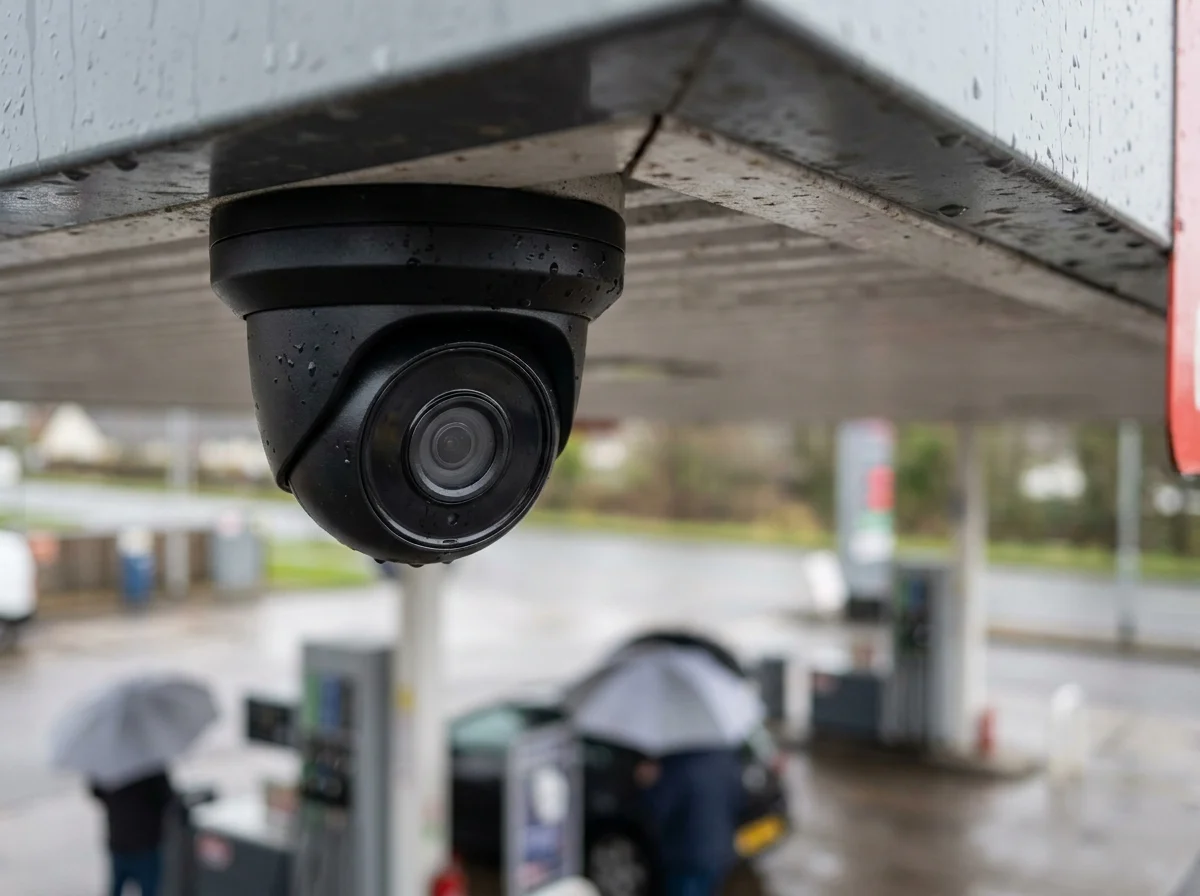
(For Illustrative Purposes Only)
Forecourts keep records of vehicle registrations and camera footage, so unpaid fills don’t just disappear. They get logged and flagged.
The industry treats two situations differently: one is a driver who deliberately leaves without paying; the other is someone who genuinely can’t pay at that moment.
If you tell staff at the time, before leaving, it makes a big difference to how things play out. There’s a recognised process for genuine mistakes.
If you don’t pay, the first step usually isn’t the police. Retailers trace the registered keeper and ask for payment, handling most cases as straightforward debt.
Usually, you’ll get a letter asking for payment. Settle it quickly, and that’s the end of it.
Police only get involved when there’s clear avoidance or repeat incidents, not honest mistakes.
If you still need the misfuel sorted, call 0131 235 2947 to arrange a professional drain.
What to do if you have already driven away

(For Illustrative Purposes Only)
If you realise you haven’t paid, go back to the forecourt or ring them straight away. Don’t wait for a letter; sorting it quickly shows it was just a mistake.
Before you contact them, gather your details:
- Date and approximate time
- Pump number, if you know it
- Vehicle registration
- Amount owed, if you have a receipt
After you pay, ask for a receipt or written confirmation and keep it safe. That way, if anyone asks later, you’ve got proof the matter’s closed.
If you’ve already had a letter about it, reply and pay using the method they give. If you get formal contact from the police or another authority, speak to a solicitor before answering.
Our professional callout report lists the date, location, and work done, which can help confirm your side if there’s ever a dispute.
Need advice or support? Call 0131 235 2947.
The three costs of a misfuel, and the one people forget
A misfuel brings three costs, each owed to someone different, and that’s why one often slips through the cracks.
First, there’s the fuel itself. That’s owed to the forecourt, and it’s the one drivers forget when everything else is happening.
Second, you’ve got the drain and recovery owed to the recovery company. No call-out fee, and you’ll get the price before we start work.
Third, there’s any repair work, but that only comes up if you started the engine and drew contaminated fuel through the system. If you didn’t touch the key, you’ll probably skip this cost.
Interestingly, the first cost is the smallest and easiest to sort, but it’s the one that causes the most hassle because it’s so easy to overlook.
Frequently Asked Questions
If you drive off without paying for fuel or put the wrong fuel in your car, you can fix things quickly and avoid extra costs. Here’s what’s worth knowing about drive-offs, misfuels, and how insurance or the police might get involved.
What should I do if I accidentally drive away without paying for fuel?
Go back to the petrol station as soon as you realise. Bring your card or cash and settle up.
Most stations will accept payment without fuss if you return quickly. If you can’t go back right away, call the station, explain, and they’ll probably take your details and arrange payment over the phone.
Acting quickly shows it was an honest mistake, not an attempt to get away without paying.
I forgot to pay for fuel after a misfuel. Is that a crime?
Forgetting to pay isn’t automatically a crime, but it can become one if you ignore it. Making off without payment is an offence in England, Wales and Northern Ireland, but Scotland uses different laws. Either way, this applies to deliberate avoidance, not honest mistakes.
If you genuinely forgot because of the misfuel and contacted the station straight away, paying up usually sorts it. Problems really only start if you ignore the situation or refuse to pay when asked.
Will a petrol station report an accidental drive-off to the police?
Most stations try to contact you first using your number plate before getting the police involved. Loads of drive-offs turn out to be mistakes, so you usually get a chance to pay up before it escalates.
If you don’t respond or refuse to pay, the station might report it. They’re more likely to do that if they think it was deliberate.
What happens if I put the wrong fuel in my car and then forget to pay?
Dealing with a misfuel and forgetting to pay are separate issues, but they can happen together if you’re distracted. For the misfuel, don’t start your engine; otherwise, you risk spreading the wrong fuel and causing more damage.
At Wrong Fuel Drainer Scotland, we can drain the tank and get you back on the road safely. For payment, just call the station and settle up as soon as you can.
Sorting both quickly really does make everything less stressful.
Does car insurance cover the cost of misfuelling and fuel recovery?
It really depends on your policy. Most standard car insurance won’t cover misfuelling, since insurers usually call it driver error instead of accidental damage.
Some insurers do offer misfuel cover as an add-on. That can pay for fuel recovery and sometimes engine repairs.
You’ll want to check your policy documents or just ask your insurer directly to see what’s actually included.
If you don’t have cover, a fuel drain service like ours can step in and help you avoid expensive repairs. We remove the wrong fuel before it does any real harm.